

 Udemezue John
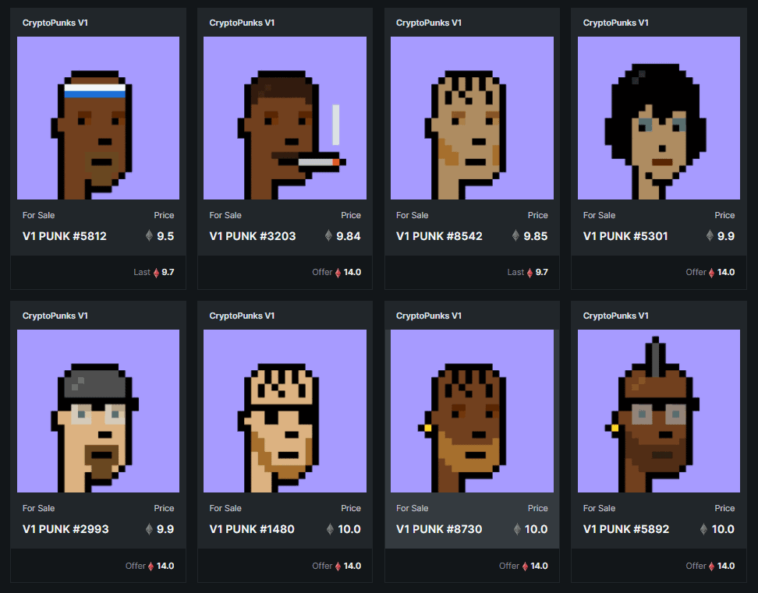
If you’re building a game or a metaverse, you’ve probably thought about integrating NFTs.
But here’s the problem most people overlook: most NFTs store their metadata on external servers or IPFS. If that server goes down, the NFT becomes useless in your game. You can’t have that.
Make sure to subscribe to this article
CryptoPunks cleverly solve this. Every single Punk’s image, traits, and attributes live permanently on the Ethereum blockchain.
No external dependencies. No servers to maintain. Just pure, unbreakable on-chain data you can read directly from a smart contract.
Let me show you exactly how to use this for your project.
Why On-chain Metadata Matters For Games
Most NFTs today store a URL pointing to metadata on a server or IPFS. The token itself is on-chain, but the actual data—the image, the traits, everything that makes the NFT valuable—lives somewhere else.
If the creator shuts down that server or stops pinning files, your game suddenly shows broken images and missing attributes.
CryptoPunks avoided this fate in August 2021 when Larva Labs moved everything on-chain. The deployment cost over 73 million gas, but now the images and attributes are part of Ethereum’s permanent record.
This matters for your game because:
- You can trust the data will always be there
- No API keys or external services are needed to fetch basic info
- The metadata can never be changed or tampered with
- Players can verify everything themselves on-chain
The Smart Contract You Need To Know
There are actually two CryptoPunks contracts. The original main contract handles ownership at address
0xb47e3cd837dDF8e4c57F05d70Ab865de6e193BBB
But the metadata lives in a separate contract at
0x16f5a35647d6f03d5d3da7b35409d65ba03af3b2.
This metadata contract is where all the magic happens. It stores encoded pixel data, attribute lists, and SVG versions of every Punk. The data is encoded compactly to keep storage costs reasonable, but the contract provides view functions that decode everything for you.
The three functions you’ll use most often:
punkImageSvg(punkId) – Returns the full Punk image as an SVG string. You can drop this directly into a web page or game interface.
punkAttributes(punkId) – Returns a human-readable list of traits like “Earring,” “Mohawk,” “Nerd Glasses,” etc.
punkImage(punkId) – Returns raw RGBA pixel values if you need to manipulate the image programmatically.
All of these are view functions, which means calling them costs zero gas. Anyone can query them without paying transaction fees.
Licensing And Commercial Use
Before you build anything commercial, understand the rights.
In August 2022, Yuga Labs (who now owns CryptoPunks) released the intellectual property rights to owners.
You can now use your CryptoPunk in commercial projects, including games, merchandise, and TV shows.
The license is royalty-free for revenue up to $5 million per organization. After that, a 20 percent blanket royalty applies. For most indie game developers, this won’t be an issue. But keep it in mind if your project takes off.
Step-by-step: Reading Punk Data For Your Game
Let me walk through how to actually implement this. I’ll assume you have basic web development knowledge.
Step 1: Connect To The Contract
Use ethers.js or web3.js to connect to the metadata contract. Here’s a minimal example:
import { ethers } from 'ethers';

const provider = new ethers.providers.JsonRpcProvider('YOUR_RPC_URL');
const contractAddress = '0x16f5a35647d6f03d5d3da7b35409d65ba03af3b2';
const abi = [
  'function punkImageSvg(uint16 punkId) view returns (string)',
  'function punkAttributes(uint16 punkId) view returns (string)'
];

const contract = new ethers.Contract(contractAddress, abi, provider);
Step 2: Fetch A Punk’s Image And Attributes
const punkId = 7804; // Alien smoking a pipe
const svg = await contract.punkImageSvg(punkId);
const attributes = await contract.punkAttributes(punkId);
The SVG comes back as a complete string you can render in an
<img>
tag using a data URI, or embed directly into a canvas. The attributes come back as a comma-separated string you can parse into an array.
Step 3: Verify Ownership
The metadata contract only tells you what a Punk looks like. To verify that a player actually owns the Punk they’re trying to use, you need to check the main contract:
const mainContractAddress = '0xb47e3cd837dDF8e4c57F05d70Ab865de6e193BBB';
const mainAbi = ['function punkIndexToAddress(uint16 punkId) view returns (address)'];
const mainContract = new ethers.Contract(mainContractAddress, mainAbi, provider);

const owner = await mainContract.punkIndexToAddress(punkId);
// Compare with the player's wallet address
Step 4: Scale With A Subgraph
If your game needs to query many Punks at once (like displaying a leaderboard or filtering by traits), calling the contract directly for each Punk will be slow.
Use the Graph Protocol instead. A subgraph indexes the CryptoPunks contracts and lets you run complex GraphQL queries quickly.
Someone has already built a public subgraph for CryptoPunks. You can query it for ownership history, trait distributions, or any Punk’s metadata without hammering the Ethereum node directly.
Real-World Examples
Ready Player Me Punks – This project created 10,000 unique 3D avatars tied to CryptoPunks ownership. Each 3D avatar mirrors the traits of an original Punk. Owners can use these avatars across over 1,000 apps and games including VRChat and Somnium Space.
Punk Loot Oracle – A proof-of-concept that breaks a CryptoPunk into separate NFTs for each trait. A Zombie Punk with a Beanie and Sunglasses becomes three tradable items: a Zombie head, a Beanie, and Sunglasses. This shows how you can decompose Punks into game items.
DigiNation – A metaverse project that converts 2D Punk images into animated 3D avatars for use in their game world.
Tools To Make Your Life Easier
Ethers.js – The standard library for interacting with Ethereum contracts. Use this for basic reads.
The Graph – For querying large amounts of Punk data efficiently. Set up a subgraph or use an existing one.
NFT metadata reader packages – Several npm packages simplify fetching NFT metadata across different standards. Look for ones that support custom contract ABIs like CryptoPunks’ unique implementation.
Challenges To Watch For
Gas efficiency – Reading from the contract is free, but writing back to the blockchain costs money. Design your game so most Punk data reads happen client-side.
Pixel size – Punks are only 24×24 pixels. If your game needs higher resolution, you’ll need to upscale them. The SVG output scales cleanly without pixelation if you use
image-rendering: crisp-edges
or
image-rendering: pixelated
in CSS.
Wrapped Punks – Many Punks are wrapped as ERC-721 tokens for easier trading on marketplaces like OpenSea.
Wrapped Punks have a different contract address. Make sure your game supports both the original and wrapped versions.
Frequently Asked Questions
Can I use any Punk in my game or only the ones I own?
For commercial projects, you need to own the Punk or have permission from the owner. Yuga Labs released commercial rights to owners, not to the public. Using a Punk you don’t own in a commercial game could get you in legal trouble.
How much does it cost to read Punk metadata?
Zero gas. All the read functions are view functions. You just need access to an Ethereum node (like Infura or Alchemy).
Can I modify the Punk image for my game?
The license allows derivative works. You can create 3D versions, add animations, or integrate Punks into your game mechanics. Just don’t claim you created the original artwork.
What about other NFT collections?
Most other collections don’t store metadata on-chain. CryptoPunks are special because of their small file size (24×24 pixels). Larger images would cost too much to store on Ethereum. For other NFTs, you’ll need to rely on IPFS or centralized servers.
Do I need to handle the SVG decoding myself?
No. The contract’s punkImageSvg function returns a complete, ready-to-use SVG string. Just render it.
Final Thoughts
CryptoPunks offer something rare in the NFT space: truly permanent, verifiable, on-chain metadata. For game developers, that’s a gift.
You can build experiences that don’t break when external servers go down. You can trust the data. You can let players verify ownership instantly.
The technical side is straightforward once you know which contracts to call. The bigger question is creative: how will you use these iconic characters in a way that respects their history while pushing game design forward?
What kind of game mechanic would you build around Punk traits that makes someone actually want to use their NFT instead of just looking at it?



GIPHY App Key not set. Please check settings